
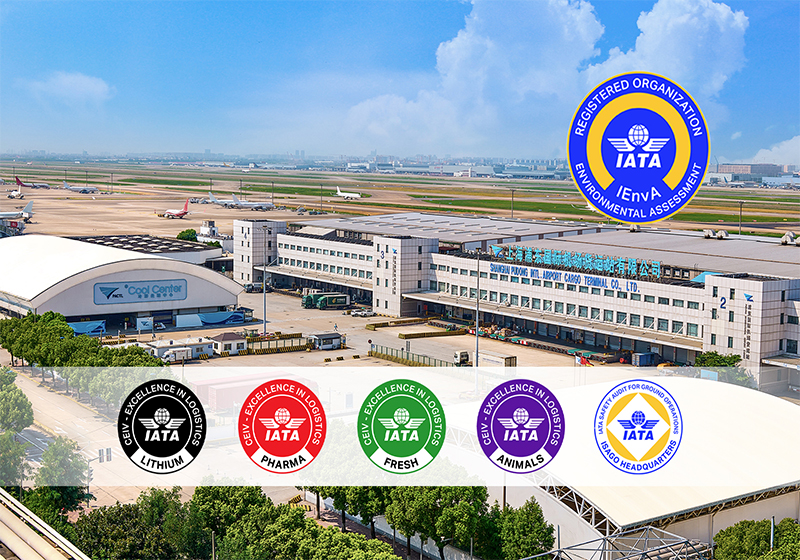
Shanghai Pudong International Airport Cargo Terminal Co., Ltd. (PACTL), together with its subsidiary, PACTL WEST has successfully achieved the International Air Transport Association’s (IATA) Integrated Sustainability Program (ISP) Environmental Assessment (IEnvA) certification, becoming the first air cargo terminal operator in the Chinese mainland to complete the ISP:IEnvA assessment. The certification adds to PACTL’s established portfolio of international accreditations, including full IATA CEIV certifications as well as ISAGO audit, reflecting the company’s long-term alignment with internationally recognized standards across safety, quality and environmental management.
PACTL has long embedded structured sustainability principles into its daily operations, cargo handling and facility maintenance, implementing initiatives such as expanding on-site photovoltaic power, electrifying forklifts, upgrading lighting systems, and promoting paperless processes. These measures demonstrate PACTL’s ongoing commitment to green transformation across key operational areas and alignment with internationally recognized sustainability standards.
“IATA commends Pudong Int'l Airport Cargo Terminal for achieving the ISP:IEnvA certification. I believe that the first move by PACTL can help advancing sustainability both effectively and efficiently. Meanwhile, this is also a remarkable and impactful step that can lead the way among all airports and other stakeholders in the Region. ISP: IEnvA will grow with our partners to strengthen the momentum of environmental progress, to deliver tangible benefits with higher quality development, as well as to build up the credibility and impact in the aviation community” said Dr Xie Xingquan, IATA’s Regional Vice President, North Asia.
Carsten Hernig, Deputy General Manager of PACTL, noted that the achievement reflects PACTL’s long-term focus on building robust and transparent environmental management practices. “Aligning with internationally recognized frameworks such as IEnvA supports our ongoing efforts to meet the expectations of customers and partners throughout the aviation supply chain,” He added.