

Vienna Airport maintained stable cargo volumes at a high level during the first seven months of 2026, despite challenging market conditions. From January to July, the airport handled a total of 182,289 tonnes of cargo, including air cargo and trucking, representing a slight 0.1% increase year-on-year.
During the first half of the year, cargo volumes reached 154,276 tonnes, up 0.2% compared with the same period in 2025. Pharmaceutical cargo was a particular growth driver, with volumes increasing by 22.4% to 2,497 tonnes between January and June, highlighting the growing importance of Vienna Airport as a hub for temperature-sensitive and high-value shipments.
In July 2026, Vienna Airport handled 28,013 tonnes of cargo, a marginal 0.3% decline compared with July 2025. Pharmaceutical cargo accounted for 479 tonnes during the month, down 1.7% year-on-year. Despite the slight monthly decline, overall cargo volumes for the first seven months remained broadly stable.
Michael Zach, Senior Vice President of Ground Handling & Cargo Operations at Vienna Airport, said: “In a highly competitive environment, Vienna Airport continues to maintain its strong position as a cargo hub for Central and Eastern Europe. Despite challenging market conditions, we remain committed to connecting key international markets from Vienna. Our well-developed infrastructure enables us to handle all types of air cargo quickly, efficiently, and to consistently high-quality standards.”
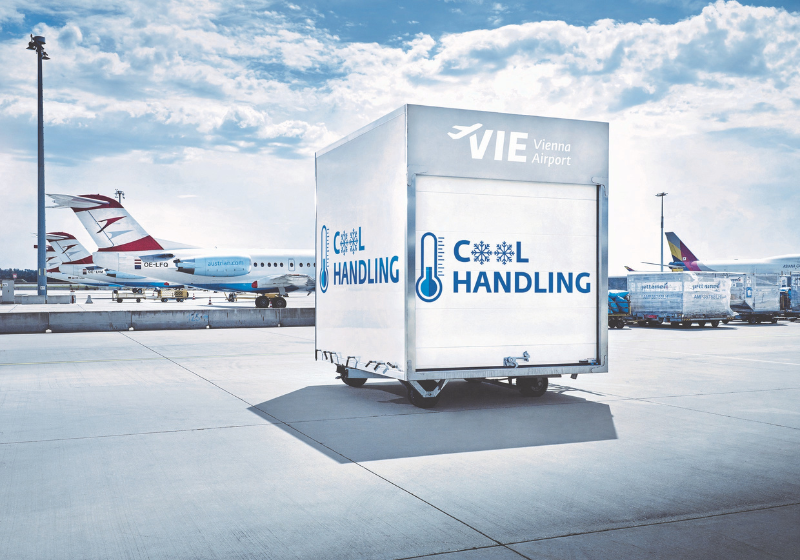
Zach added that Vienna Airport's cargo portfolio continues to evolve beyond traditional air freight, including high-tech products, industrial components, e-commerce shipments and pharmaceutical products. He also highlighted the growing role of the airport's Vienna Pharma Handling Center, which is rapidly developing into an important logistics hub for international pharmaceutical cargo flows.
The continued stability in overall cargo volumes, combined with strong pharmaceutical growth during the first half of the year, reinforces Vienna Airport's role as an important gateway for cargo flows between international markets and Central and Eastern Europe.