

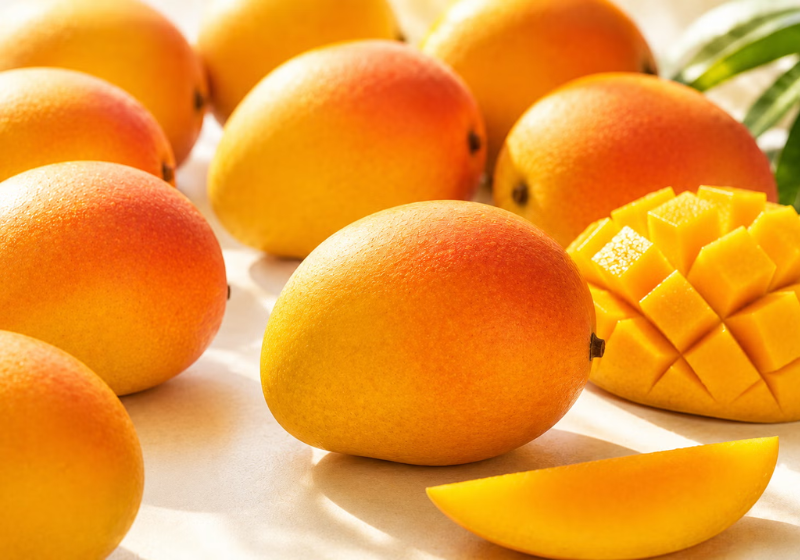
On a humid evening in Mumbai, as Air India’s widebody aircraft prepare for their overnight departures to London, New York and Frankfurt, the cargo holds below the passenger cabins are filled with boxes of carefully packed mangoes, their fragrance contained but unmistakable.
Each year, as India’s summer ripens, this ritual resumes. In 2026, the scale has been striking.
Between March and May 2026, Air India transported more than 3,300 tonnes of fresh produce across its network. Over 1,000 tonnes of that cargo consisted of mangoes, the fruit that occupies a near-mythic place in India’s culinary and cultural imagination, and an equally cherished one among diaspora communities abroad.
The surge unfolded steadily. In March, as the first consignments began to move, Air India carried 805 tonnes of fruits and vegetables. By April, at the peak of the harvest, that number had risen to 1,275 tonnes, before remaining strong in May at 1,233 tonnes.
Much of this volume traces back to India’s western belt, particularly the mango farms of Maharashtra and Gujarat, where the Alphonso and Kesar varieties are grown. Revered for their sweetness, texture and aroma, these mangoes command loyal followings from Dubai to New Jersey.
And it is Mumbai, with its proximity to this agricultural heartland, that becomes the season’s logistical nerve centre.
From the city’s cargo terminals, shipments fan outward across continents. During this three-month period, London Heathrow saw as much as 180 tonnes of weekly uplift from Mumbai during peak weeks. Frankfurt received around 40 tonnes, while Dubai, Newark and New York JFK each absorbed roughly 30 tonnes weekly.
The routes themselves tell a story of migration, taste and memory.
In West Asian cities such as Dubai, Indian mangoes arrive at markets where familiarity runs deep. In London and New York, their appearance signals the start of a brief but intense retail window, where specialty grocers stack crates high and customers buy in bulk, often sending them onward again to friends and family.
From Delhi, Air India’s aircraft continue to carry perishables to cities as far-flung as San Francisco, Toronto, Paris, Hong Kong and Sydney, embedding Indian produce into global supply chains that are commercial in function, yet emotional in significance.
The airline today handles over 400,000 tonnes of cargo annually, making it India’s largest international cargo operator.
Yet the journey of a mango from farm to overseas shelf is not merely about distance. It is about time and temperature.
Long before the aircraft doors close, the cold chain is already in motion. Produce arrives at airport terminals in refrigerated trucks, coordinated by IATA-approved agents. At origin, it is stored in temperature-controlled environments, typically maintained between 15°C and 25°C, before being loaded into specialised pallets and containers.
The process repeats itself after landing, where temperature-regulated handling continues until final delivery.
Over the past few years, Air India has invested in strengthening this infrastructure. Today, the airline operates cold-storage and active-container capabilities across 14 airports, including major hubs such as Delhi, Mumbai, Bengaluru, London Heathrow, Frankfurt, and New York's JFK and Newark airports.
Supporting equipment, from cool dollies to thermal blankets, helps ensure temperature stability is maintained even during brief but critical moments on the tarmac.
These facilities are GDP-certified, aligning them with global standards for handling temperature-sensitive cargo.
“Transporting over 1,000 tonnes of mangoes in just three months reflects both the scale of demand and the robustness of our cold-chain processes,” said Ramesh Mamidala, Head of Cargo, Air India. “Perishables require meticulous handling, and our teams work closely with partners to maintain consistency and quality at every step.”