
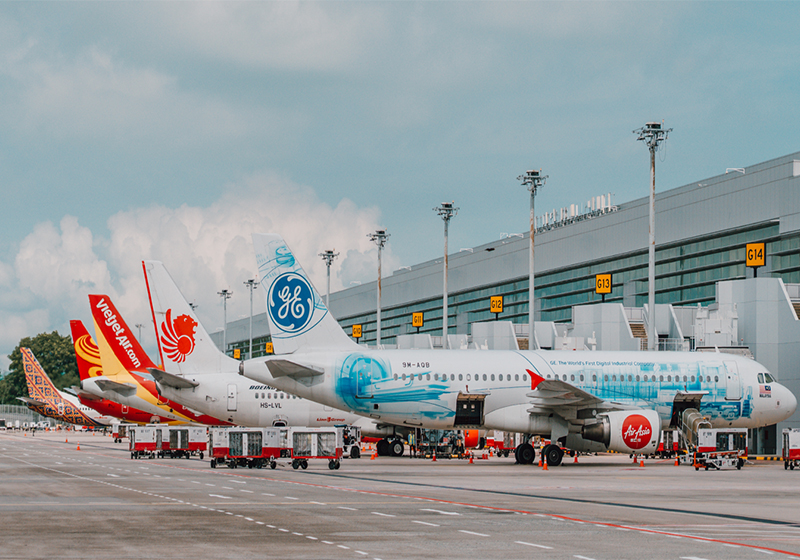
Singapore Changi Airport handled 567,000 tonnes of airfreight in the second quarter of 2026, a 9.8% year-on-year increase, driven by robust demand across all cargo flows, particularly AI-related semiconductor and electronics shipments.
The airport's top five air cargo markets during the quarter were China, the United States, Australia, Hong Kong, and India, highlighting Changi's role as a key gateway for global trade and high-value cargo.
Despite a challenging operating environment for airlines, including elevated jet fuel prices and fuel supply constraints that impacted passenger services, Changi continued to strengthen its cargo network.
A key development during the quarter was the arrival of Tianjin Air Cargo as Changi Airport's newest freighter operator. The airline launched scheduled cargo services between Singapore and Haikou on 15 June, further expanding the airport's dedicated freighter network and enhancing cargo connectivity with China.
Commenting on the outlook, Lim Ching Kiat, Executive Vice President for Air Hub and Cargo Development at Changi Airport Group, said the airport remains focused on strengthening its position as a global air cargo hub through continued route development and operational improvements.
"While airlines continue to adapt their services in response to evolving operating conditions, we remain focused on building a more diversified and well-connected hub through route development and improving operational efficiency to support reliable operations," he said.
Changi Airport's strong cargo performance in the second quarter underscores sustained demand for high-value shipments and reinforces Singapore's position as a leading logistics and airfreight hub in Asia.