
Swissport has reached a significant operational milestone at EuroAirport Basel–Mulhouse–Freiburg, handling 1,000 temperature-controlled containers (RKN-equivalent units) through its "cool+connect" facility. The milestone reflects strong growth in pharmaceutical volumes and reinforces Basel’s role as a key European gateway for life science air cargo.
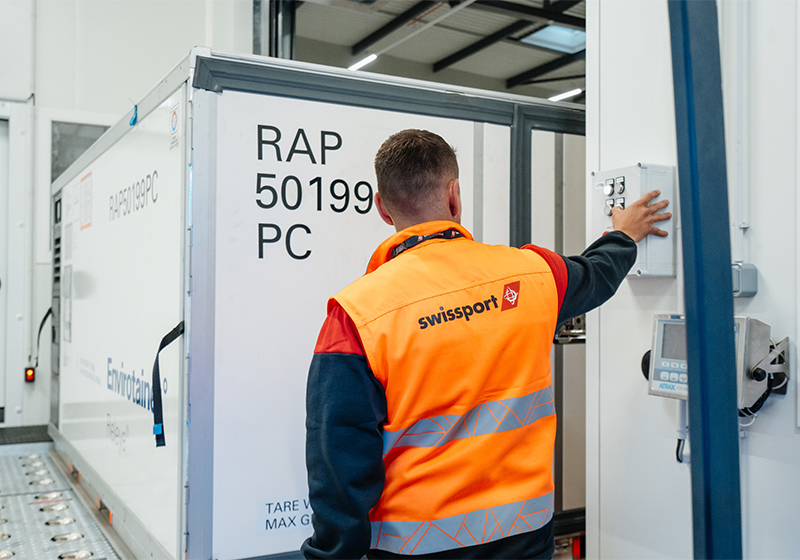
Since the launch of its “cool+connect” infrastructure in February 2025, Swissport has processed more than 1,000 temperature-controlled containers at EuroAirport Basel, with monthly volumes increasing to 200-250 (RKN equivalents units). This sustained growth reflects increasing demand for reliable, airport-based cold chain solutions, positioning Swissport at the heart of global pharmaceutical supply chains connecting Europe with key markets in Asia and beyond. The milestone underscores Basel’s growing importance as a European life science export hub and confirms Swissport’s expanding role as a strategic gateway for temperature-sensitive pharmaceutical shipments, backed by a network of 24 certified pharma centres and 65 pharma-capable warehouses worldwide.
With its dedicated cool+connect infrastructure, and integrated digital monitoring systems, Swissport has significantly optimized the handling of +2 to +8°C shipments by consolidating consignments directly at the airport in order to be loaded into Active Cooltainer while maintaining 100% the cool chain. This eliminates off-airport trucking loops, reduces handling times by around 70% and materially lowers CO₂ emissions, while ensuring maximum shipment integrity.
“Reaching this milestone highlights the structural growth we are seeing in temperature-controlled cargo,” says Andreas Behnke, Regional Head of Cargo, Switzerland, Italy and France. “Demand from global pharmaceutical manufacturers and healthcare logistics providers continues to increase, particularly for airport-based solutions that reduce complexity and transit time. Our unique state-of-the-art facility combines efficiency, scalability and sustainability in a way that meets the evolving requirements of modern pharmaceutical supply chains.”